The buyer's-eye read for placing a group of 20 to 200: the hotels that actually hold a group, real drive times, the transfers to pre-book, and what I'd skip. Region by region.
I went as a buyer, not a tourist. I judged every hotel as a guest who has to fill those rooms with a real group, weighed each meal as a table I'd have to seat, and counted every drive as time on a bus.
Six days, nine regions, one question on repeat: could I bring a group here, and what would I book it for? Below is the honest answer. I add a region every day this week as I post it, so check back, the guide keeps growing.
The capital almost nobody puts on a shortlist, and the reason the whole trip works: base your group here for 2–3 nights and day-trip the rest of the country. The center is completely car-free, you're 25 minutes from the airport (Brnik), and you can reach the Alps or the Adriatic in about two hours.
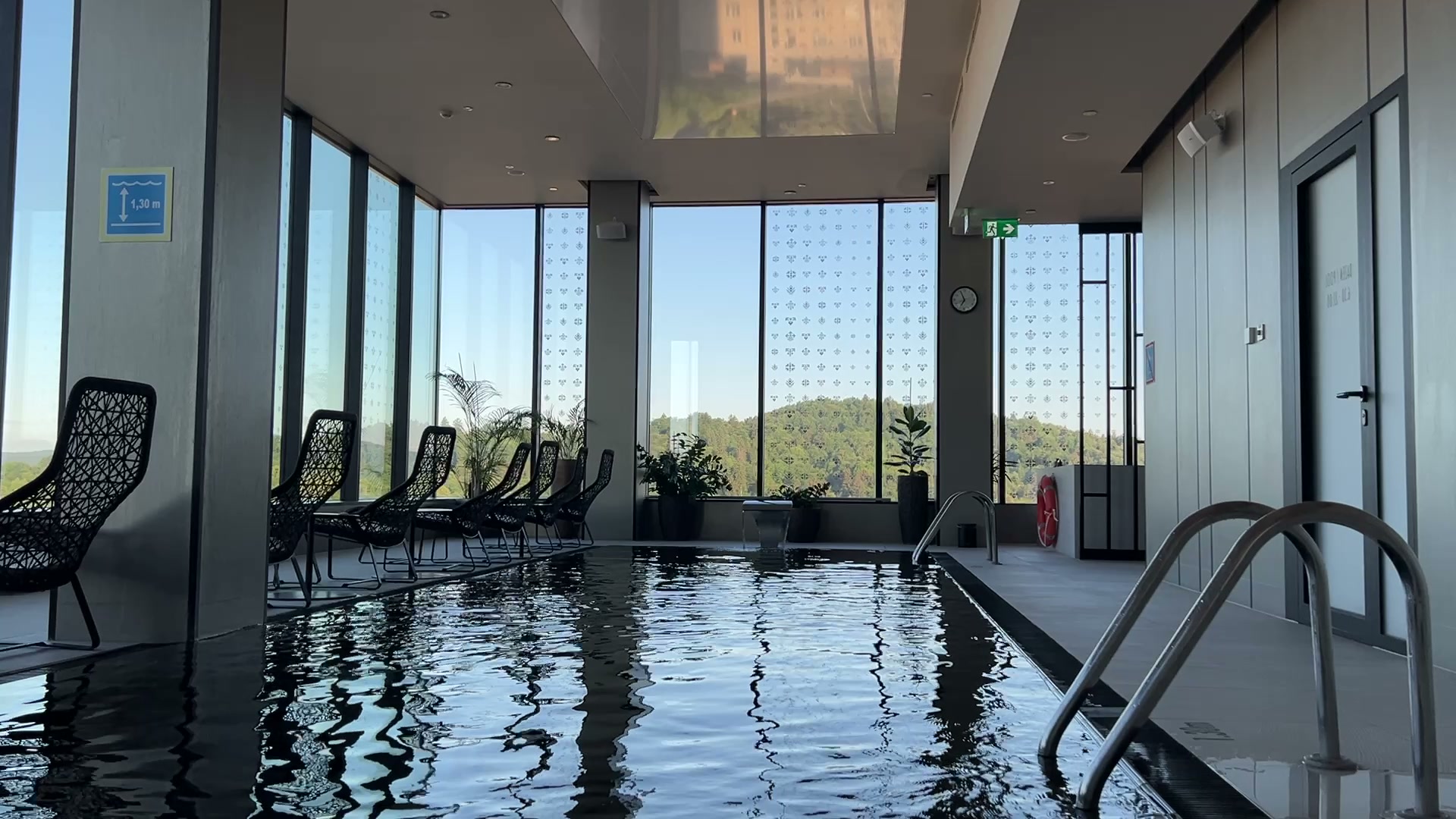
The premium central anchor. Rooms are genuinely excellent (proper work desks, real bathrooms, city views), service is warm, and the rooftop bar + spa-and-pool with a city view is the standout. Walkable to everything. This is where I'd put the group for the city portion.
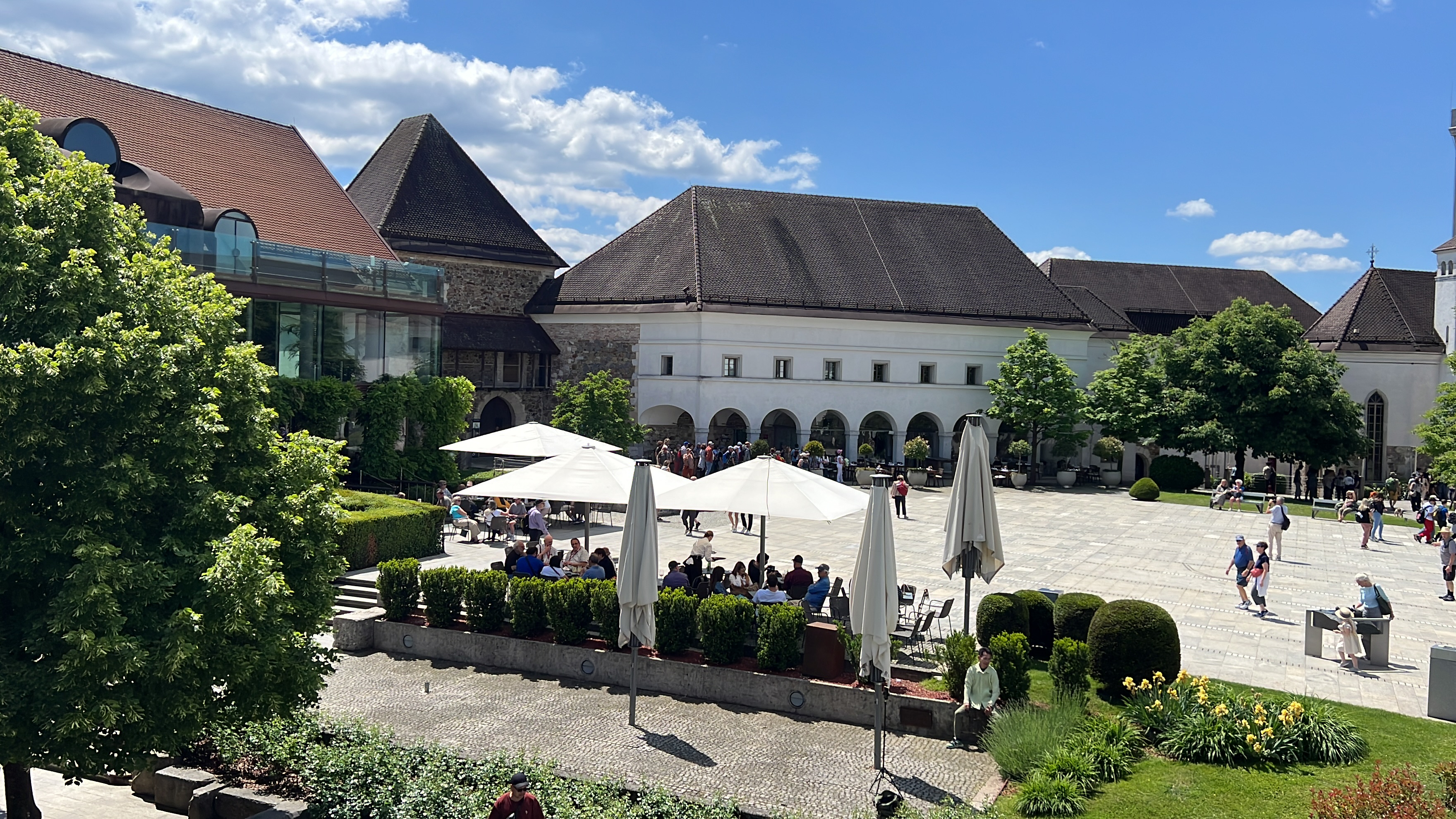
Lunch up at the castle, overlooking the rooftops to the Alps, is the move for a hosted welcome: lovely local wines, a seated group format that holds, and a sense of arrival you can't stage in a ballroom.
Both are congress-scale. Impressive, but built for a large plenary rather than an intimate incentive, so I'd pre-align the use case before placing a 40–100 group in them. The castle and the boutique venues fit a reward group better.
Jure Galičič, the market consultant who showed me around, knows the city cold and reads a group beautifully, exactly the kind of local contact you want introducing your people to a place. Meet at the pink church on Prešeren Square, hit the open-air market in the morning, walk the river at golden hour with no traffic anywhere. One I missed and would build in: Odprta Kuhna (Open Kitchen), the Friday food market.
A 2–3 night premium base for 20–200, then day-trips out to Bled, Brda, and the coast. Strong service, walkable, and a city your competitors haven't used. Always arrange private transfers, never a public-transport leg.
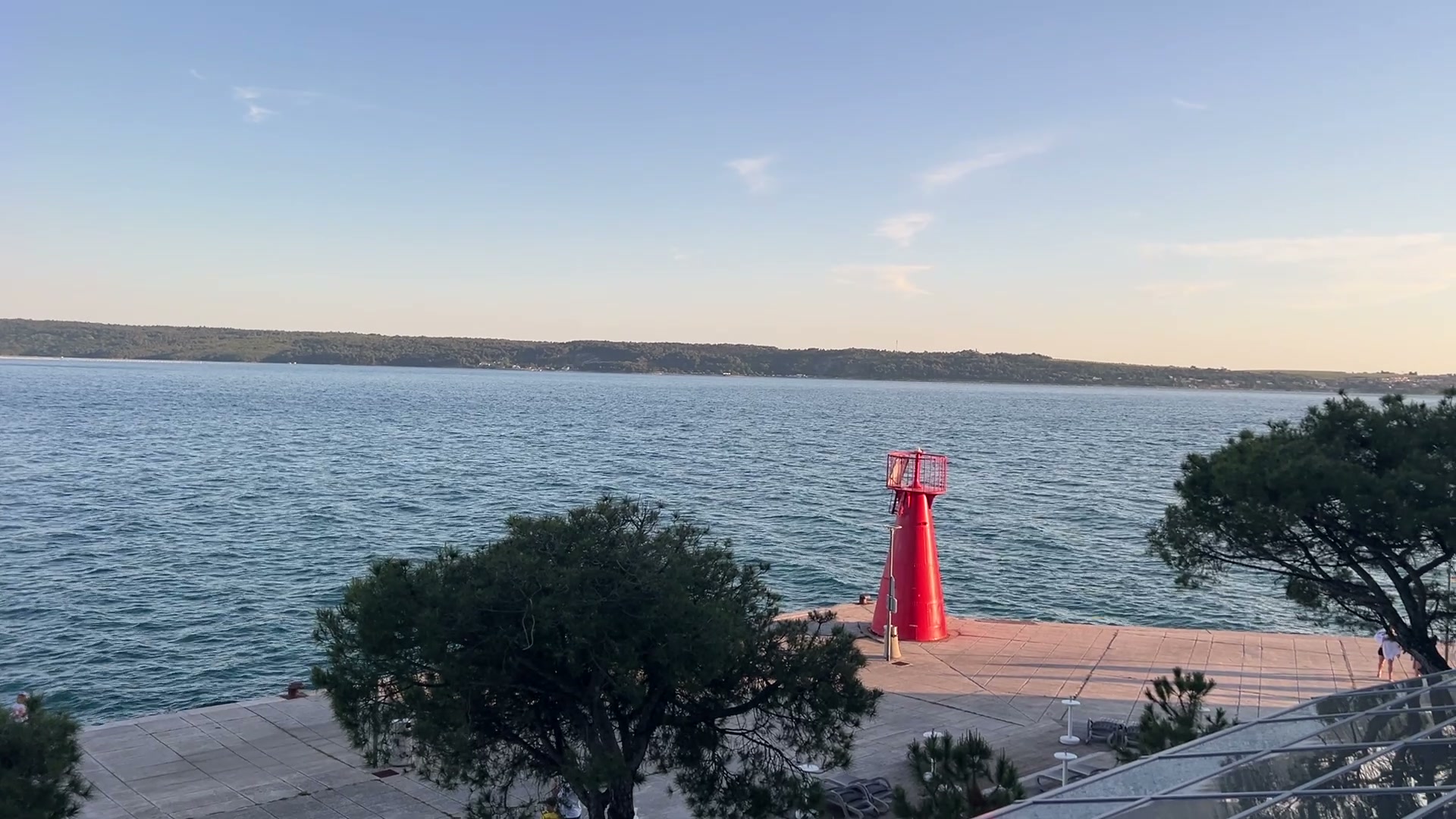
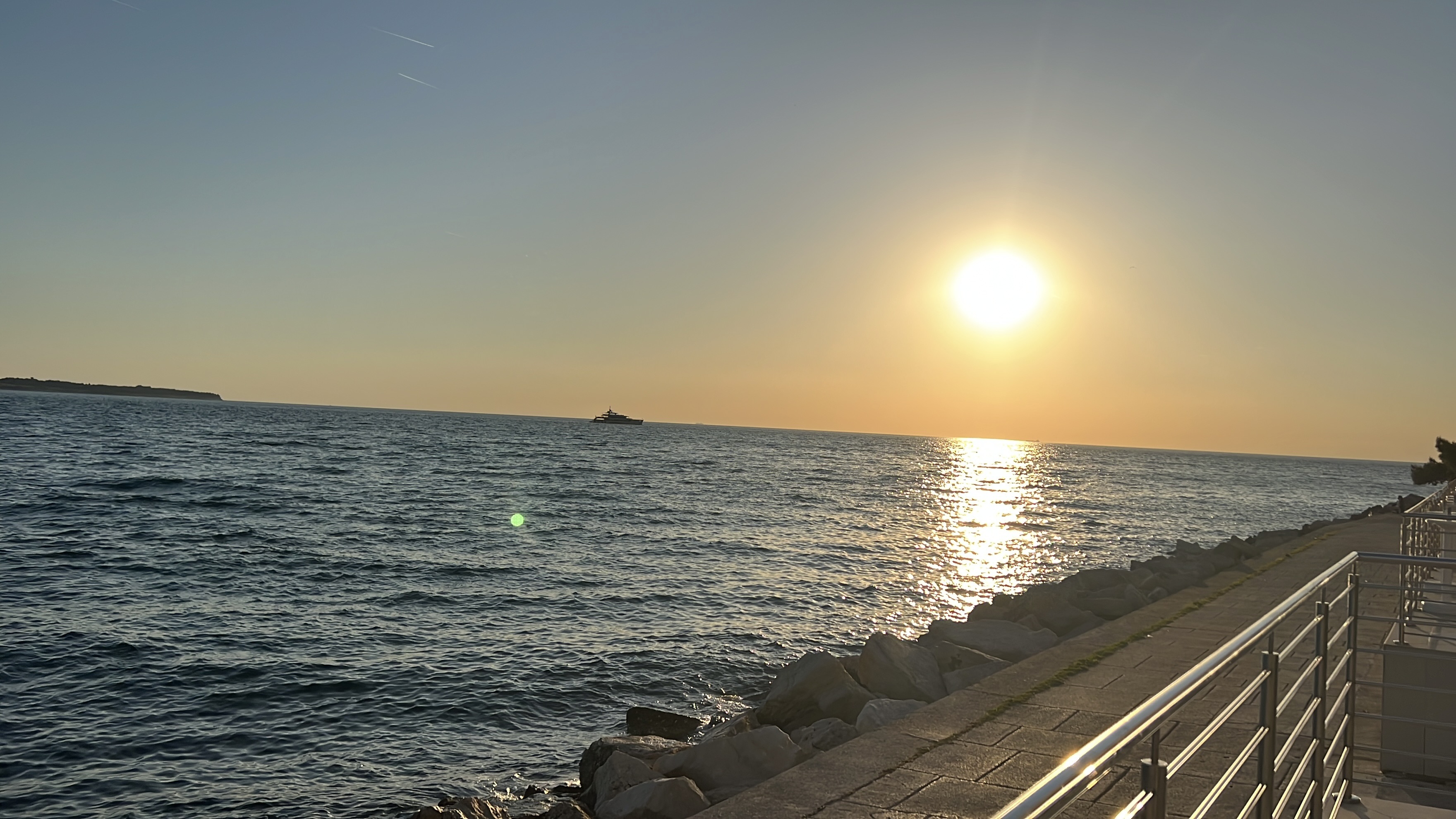
Slovenia gets one small stretch of Adriatic, barely 47 km, and Piran is the jewel of it: marble squares, a bell tower over the rooftops, and a sea you can swim before breakfast (I did, it's bracing). The old town is car-free, so a group parks at the edge and walks in. Portorož, the resort strip a few minutes away, is where the hotels actually sit.
A warm, seated dinner in the lanes off the square, exactly the intimate format a reward group remembers. Local, unhurried, the kind of place a host can take over without it feeling staged.
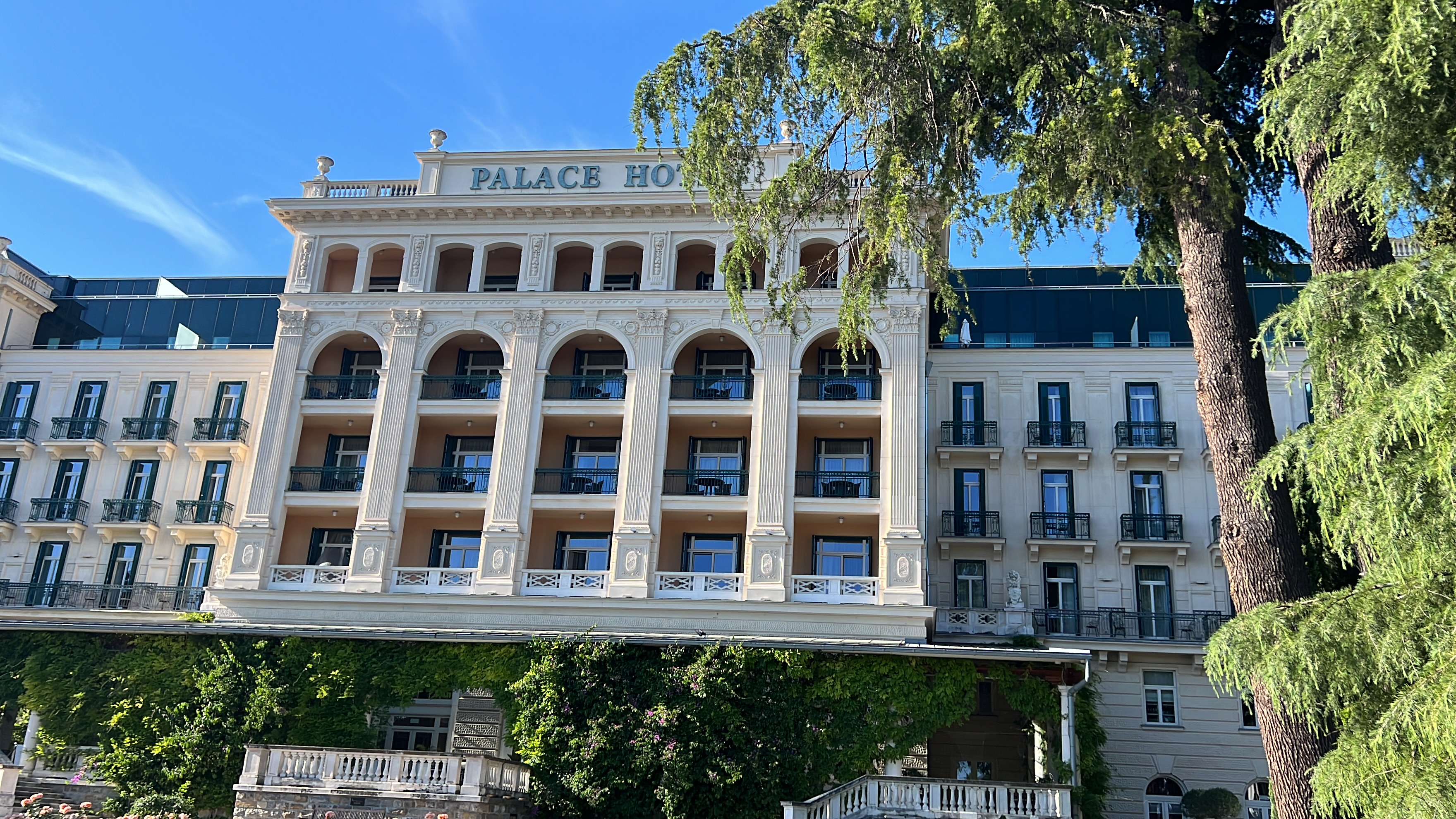
The four- and five-star properties cluster along the Portorož waterfront, a short transfer from Piran's charm, with a grand palace-style hotel anchoring the strip. I'd confirm the exact property and its current state before committing, because a few along this coast are mid-refresh.
Genuinely beautiful, and a dinner in Piran plus a swimmable Adriatic makes a strong half-day or overnight inside a larger itinerary. I ran the coast as a fast circuit, though, so I'd want a second, slower look at the Portorož hotels before placing a group on a dedicated beach week. Best used right now as the coastal day off a Ljubljana base. Private transfers, never a public-transport leg.
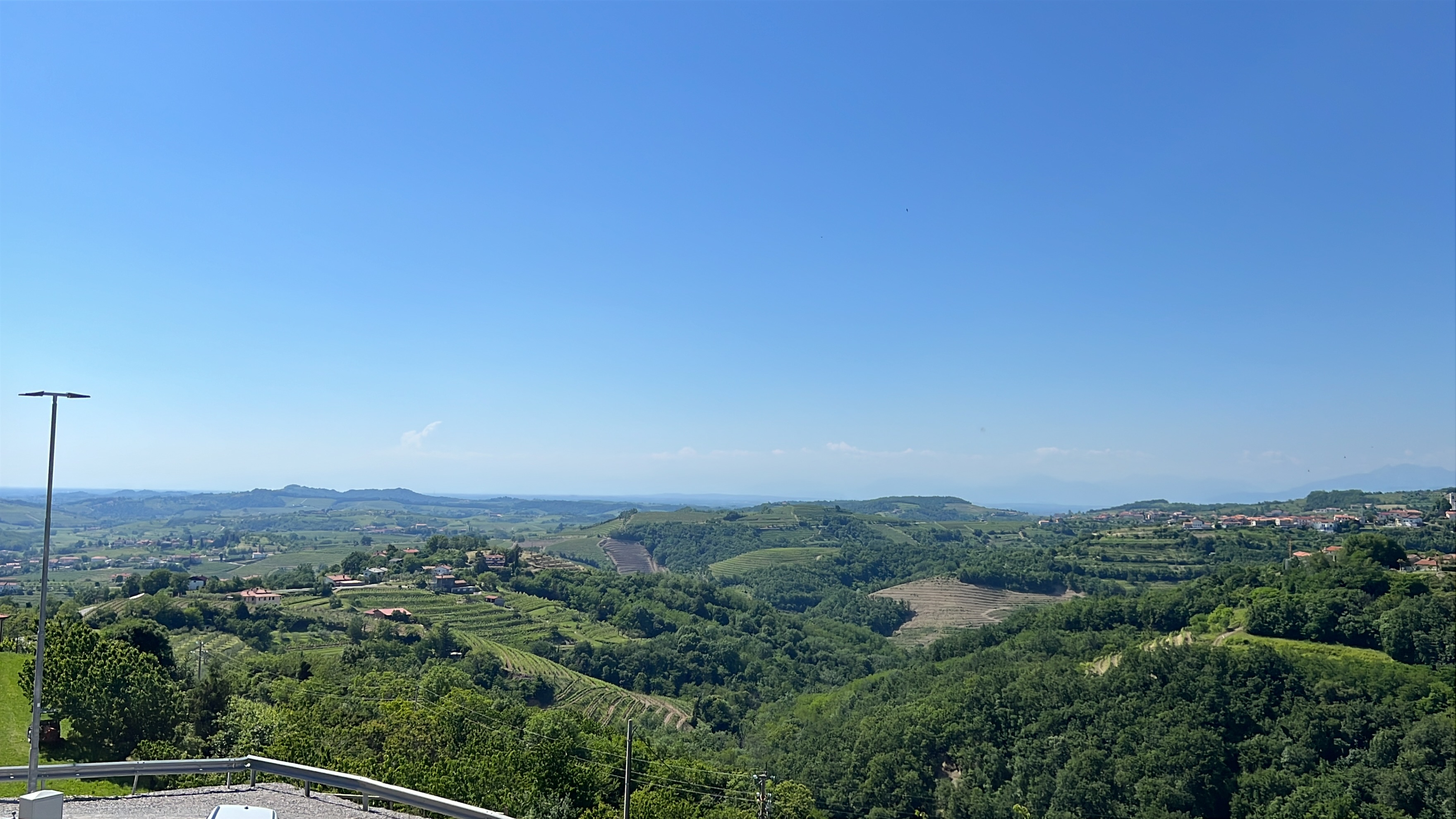
The most beautiful leg of the trip and the one nobody expects: Goriška Brda, Slovenia's wine country where it folds into Italy (it was the Slovenian Convention Bureau's recommendation, and they were right). Medieval villages, family-run wineries, hand-cut pršut, cherry strudel in season, and not a tour bus in sight. This is the leg I'd build a smaller premium program around.
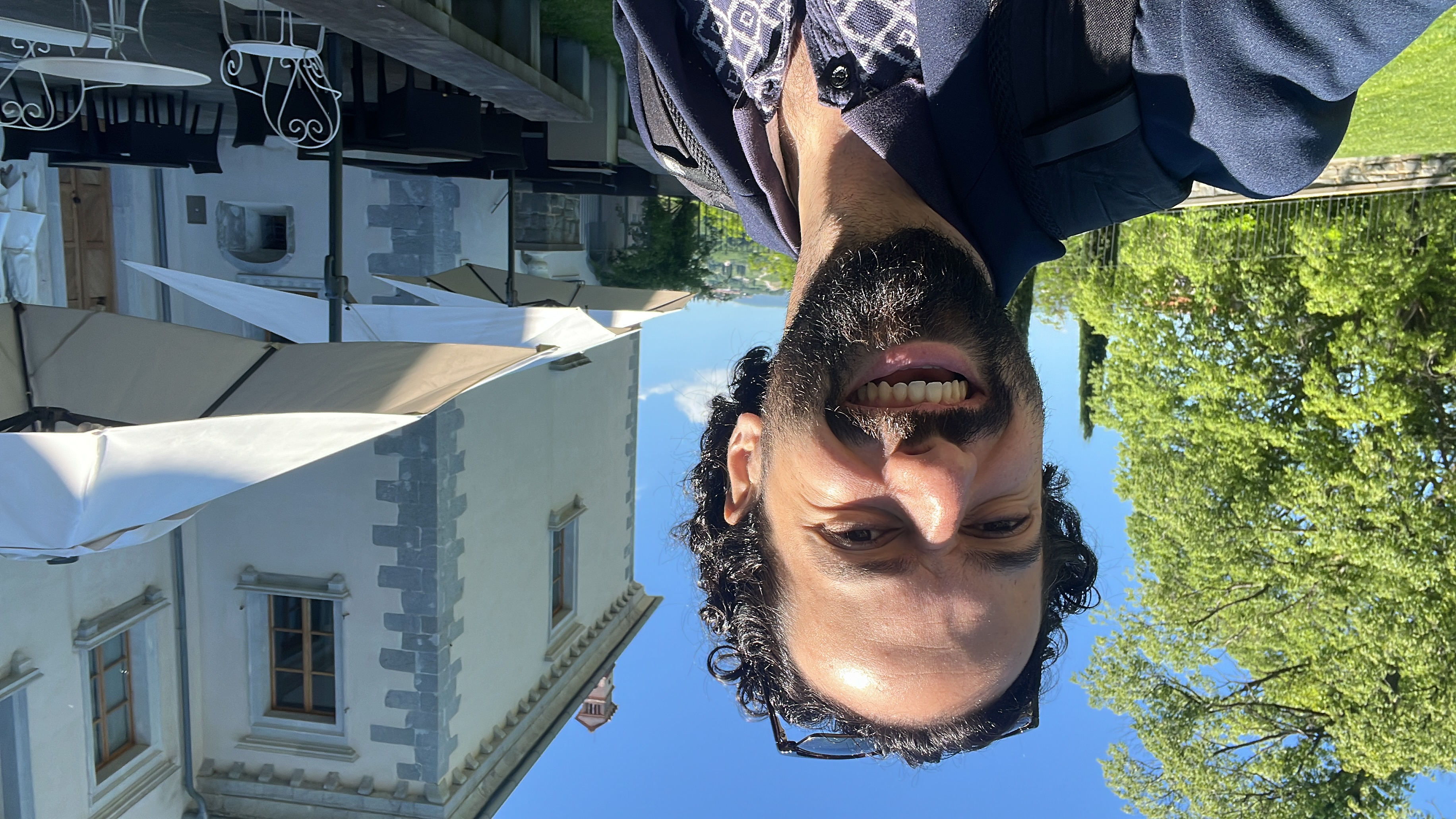
A renaissance villa in the vines and the obvious anchor for the hosted dinner: real architecture, space for a seated group, and a setting your people will not have seen at another company's offsite. Pair it with a winery tasting earlier in the day and the evening builds itself.
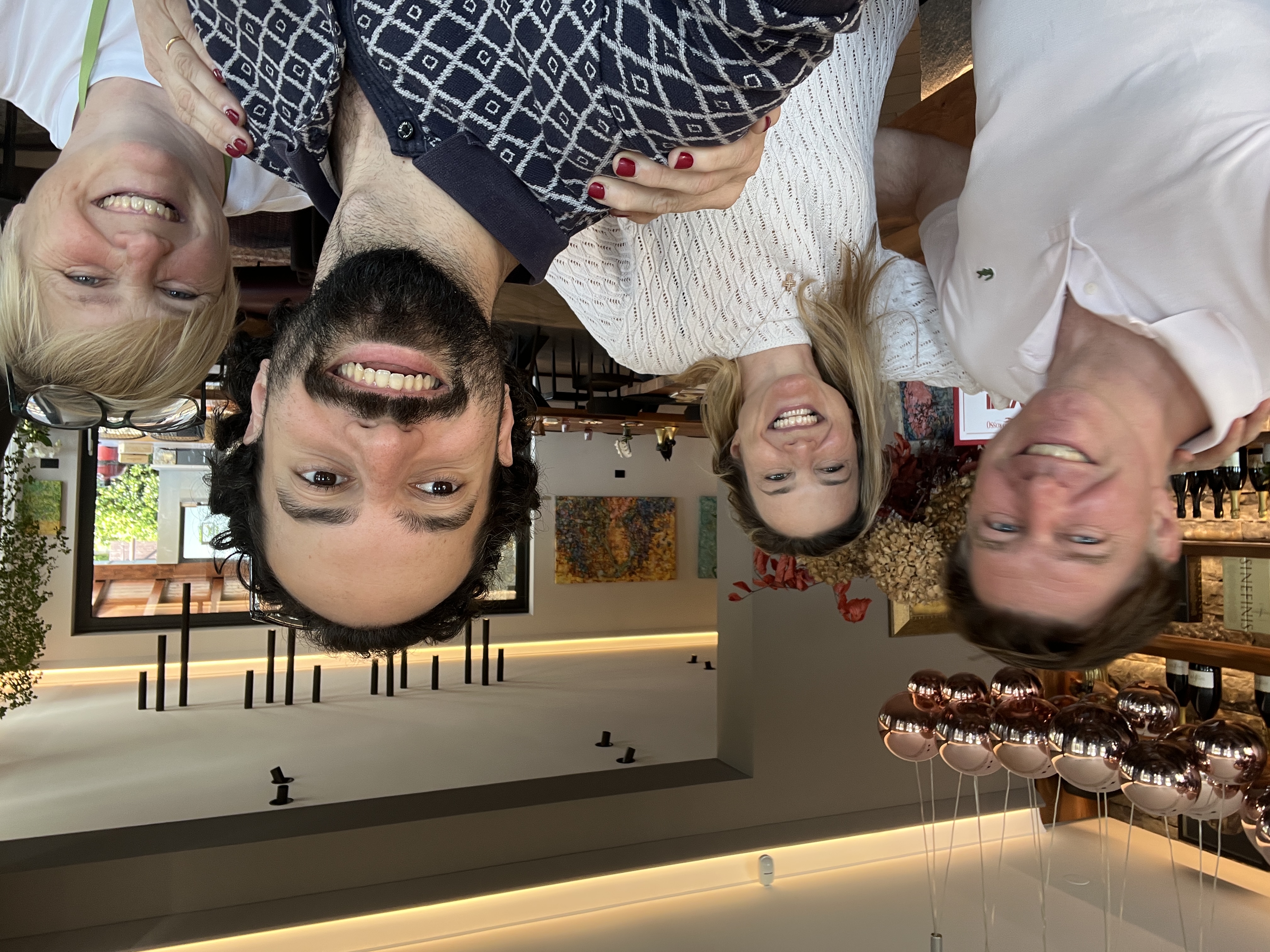
The owners turned out to have visited Argentina and love our wine, and the tasting stopped feeling like a supplier visit within minutes. That's the Brda texture: the good houses are family-run, so book the tasting ahead and you get the family, not a tour script.
Climb the Gonjače lookout first for the lay of the land, the vine hills run unbroken into Italy, then walk Šmartno's medieval lanes with a local guide. Šmartno is also where I'd base the group: every drive in Brda stays under twenty minutes.
We overnighted at Hotel Perla in Nova Gorica: functional more than memorable, and the meals made up for it. It works as a logistics base, but for the experience itself I'd keep the group sleeping in Šmartno, or run Brda as the day-trip jewel off a Ljubljana base.
A smaller premium group, wine-led: a tasting at a family house, the hosted dinner at Vila Vipolže, short drives, and zero chance of running into another company's offsite. Book the wineries ahead, the good ones are family-run.
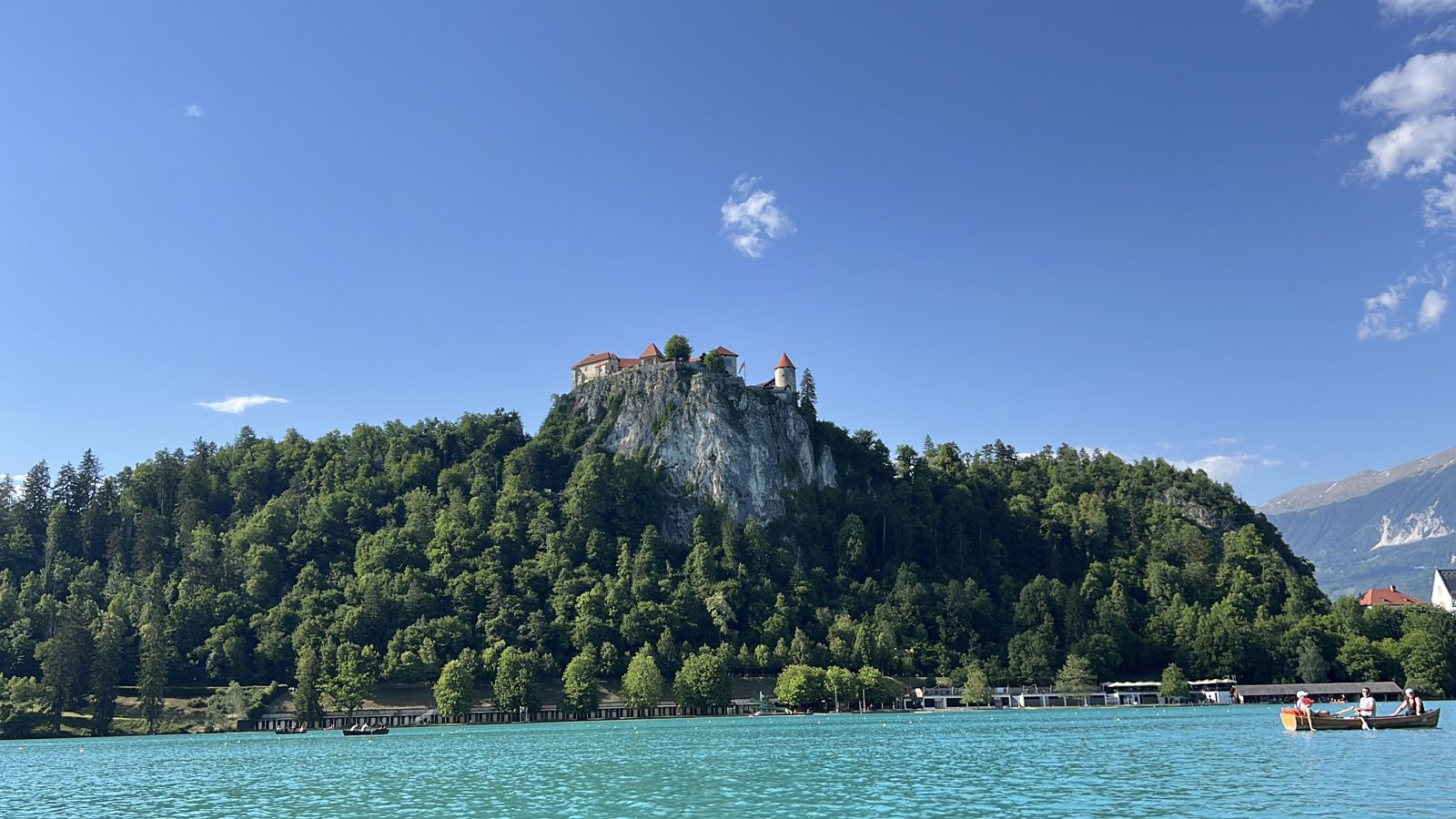
The lake on every postcard, and it earns it: the island church, the cliff-top castle, the electric boats. A 5-star stay on the water (Sava Hoteli Bled) and a convention bureau that hosts well. It's the one stop every participant already recognizes before the trip, and that recognition does half the program's work for you.
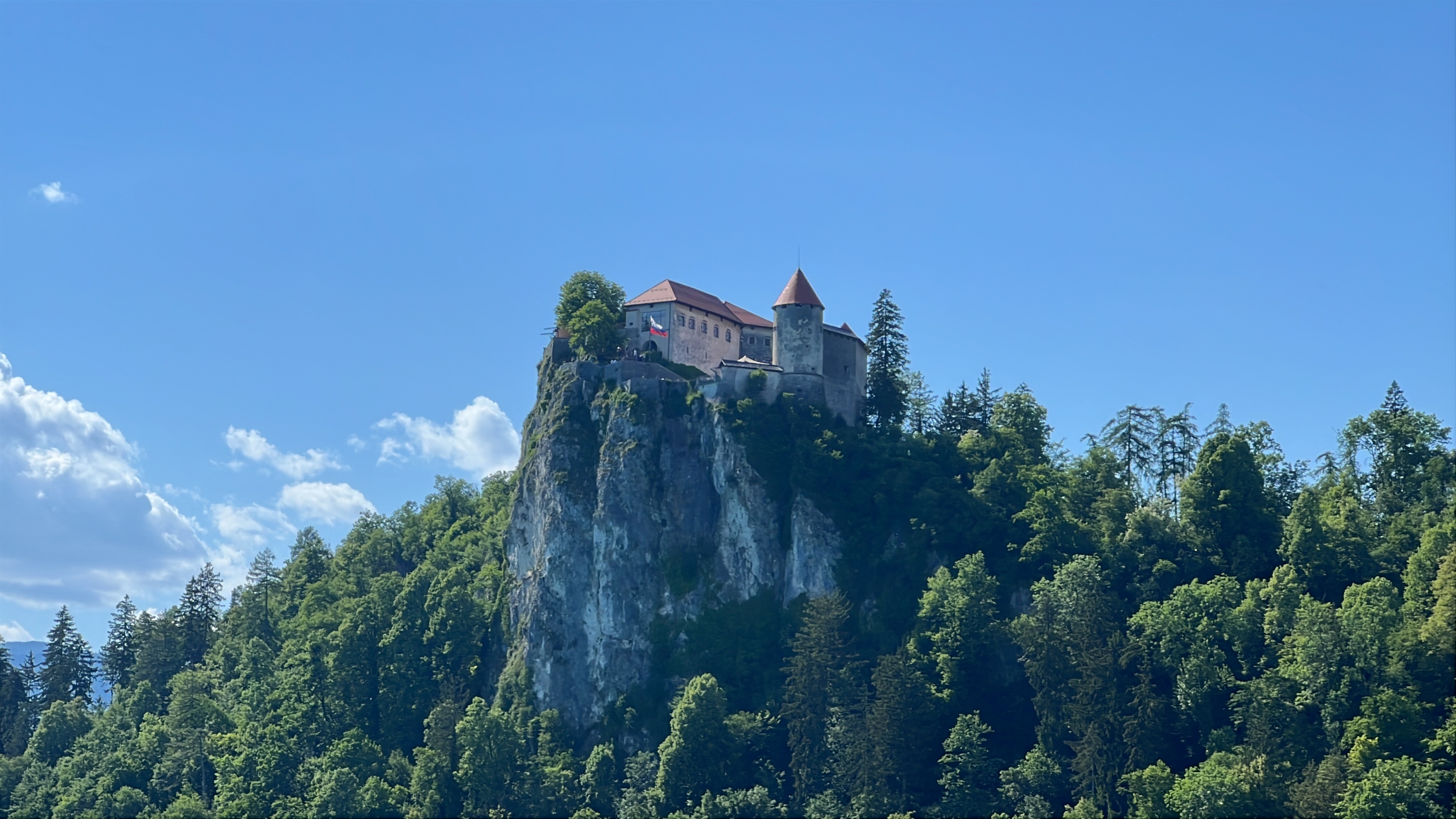
Everyone pre-books the hotel. What actually runs out at Bled is the small stuff: the island boats and the castle lunch tables. Lock those two first and build the day around them, and a sunny Saturday feels effortless instead of crowded. Lunch up at the castle earns its cliché, because you eat above the whole postcard.
Motorboats are kept off the lake, so you charter a quiet electric one and hear your guide instead of an engine. Ours talked history: a Swiss healer named Rikli set up here in the mid-1800s, and they credit him as the founder of organized tourism on the lake (one of the hotels still carries his name). Swimming is allowed, and in May, I would say, brave.
I tested the public bus in so you don't have to: lovely ride, chaotic arrival, luggage drama. For a group it's private transfers, no exceptions. From Ljubljana you're in well under an hour, which is why Bled works as the marquee day of a capital-based program.
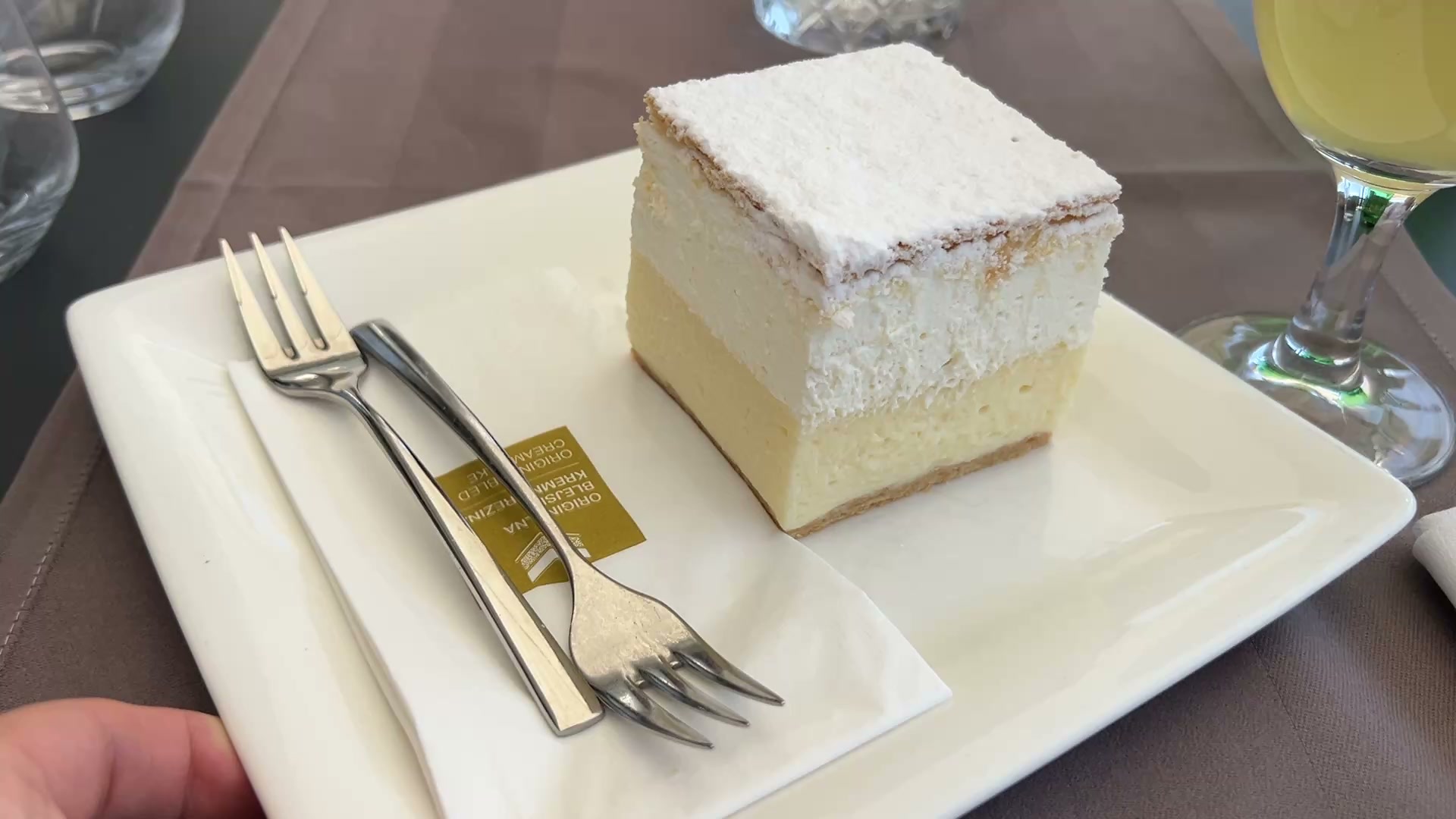
The cream cake was invented here. I would say it alone justifies the coffee stop, and it photographs almost as well as the lake.
The marquee day of a Slovenia program. Pre-book the island boats and the castle tables, keep the transfers private, and pair it with Bohinj and Vogel next door when the group wants the wilder version of the same water.
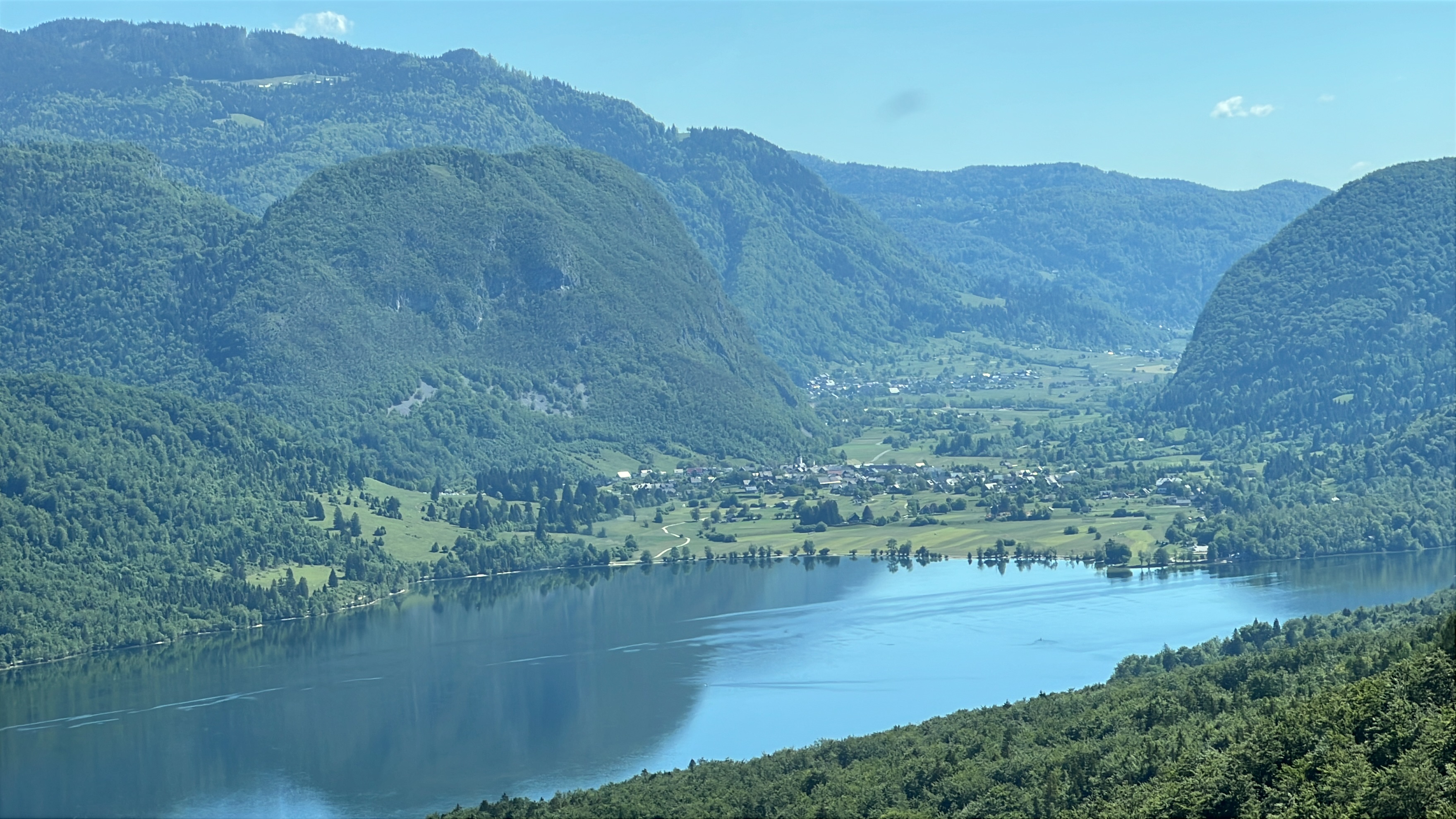
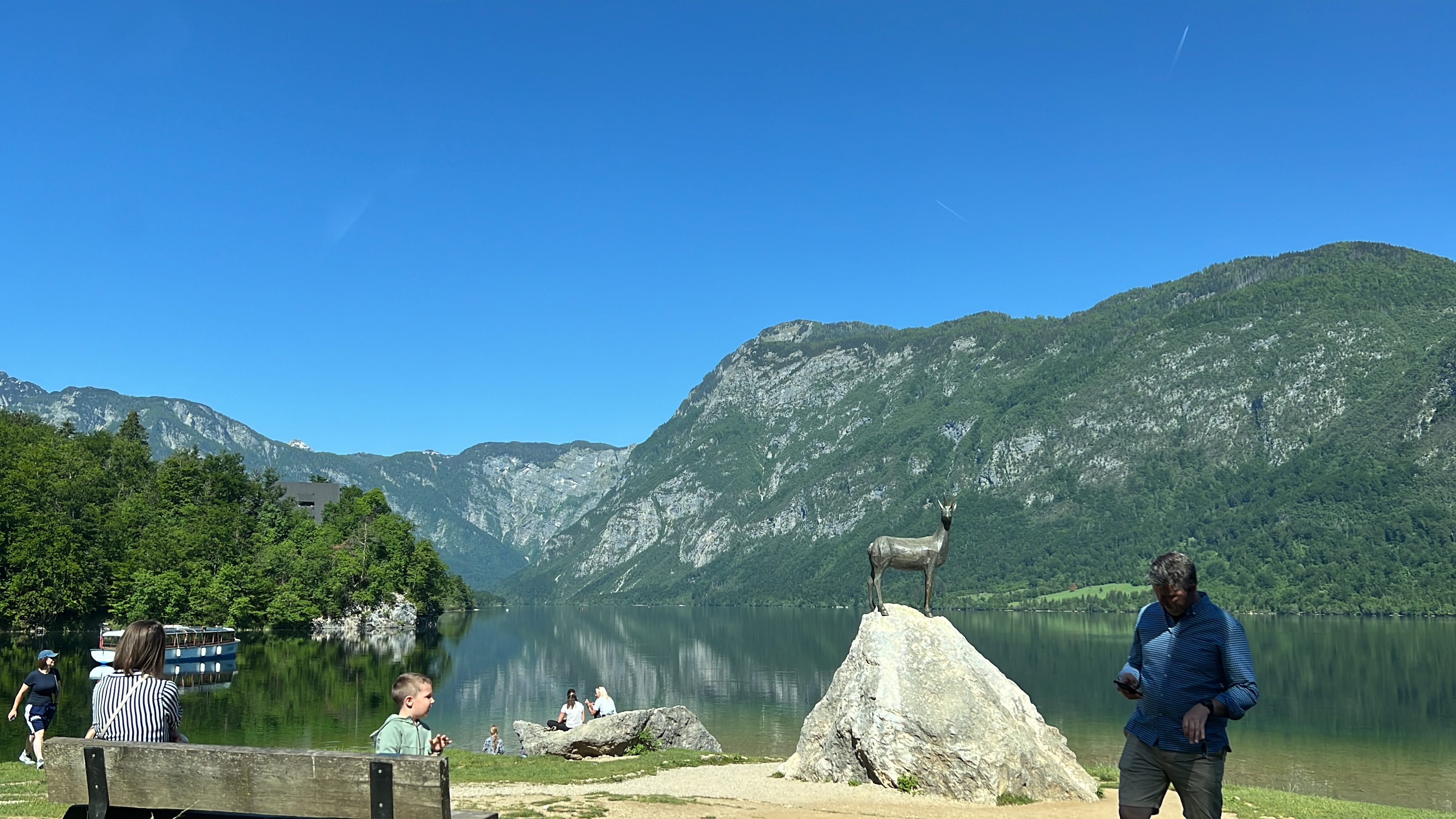
The bigger, wilder lake, and the half-day that makes a group feel let in on something. No island to pose with, no crowd to fight, just water against the mountains. Bohinj sits twenty minutes from Bled and almost nobody makes the drive, which is exactly why it works for a group.
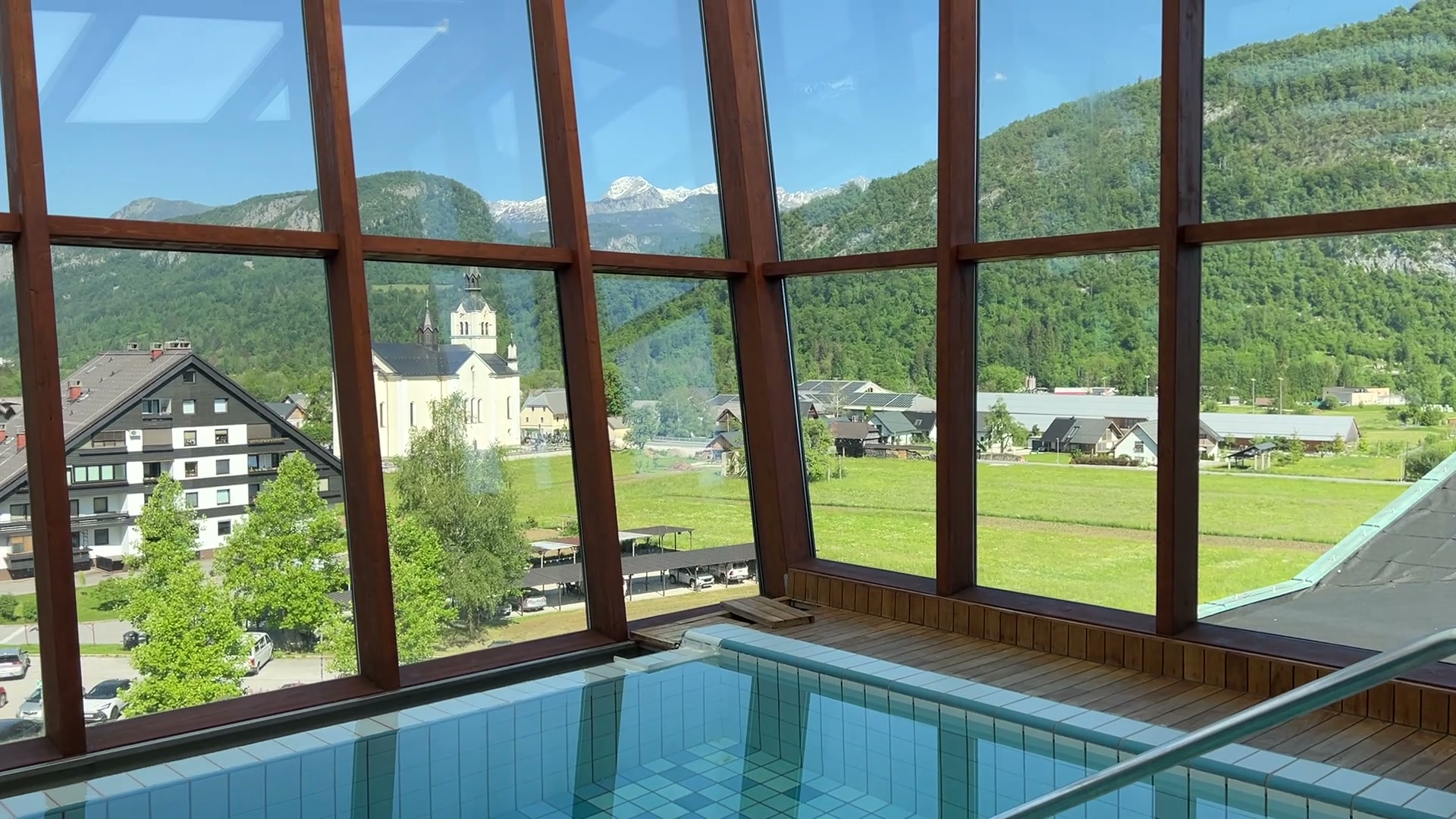
A genuinely strong group property and the reason this leg holds: an indoor pool with mountain views, a rooftop sauna, and several food outlets under one roof, so you can seat a group without busing them out for every meal. Modern, well-run, and quiet enough that the place feels like yours.
The cable car lifts you off the lake and onto the mountain, and the view back down over the whole valley carries the afternoon: a lodge and a terrace at the top, walking trails for the active half of the group, and a panorama people photograph for an hour. This is the activity I'd build the half-day around.
Swimmable, ringed by trails, and empty enough on a weekday that a small group can have a stretch of shoreline to itself. Pair the morning on the water with the cable car after lunch and the day builds itself.
A clean, modern motorail and good road get you in from the Bled side in well under half an hour. As everywhere in Slovenia, keep it a private transfer for a group, never a public leg. It pairs naturally with Bled on the same day or the next.
The wilder half-day beside Bled: the ECO Hotel as a quiet group base, a morning on the water, and the Vogel cable car for the view that earns the trip. Where you take a group when you want them to feel they've seen the Slovenia other companies miss.
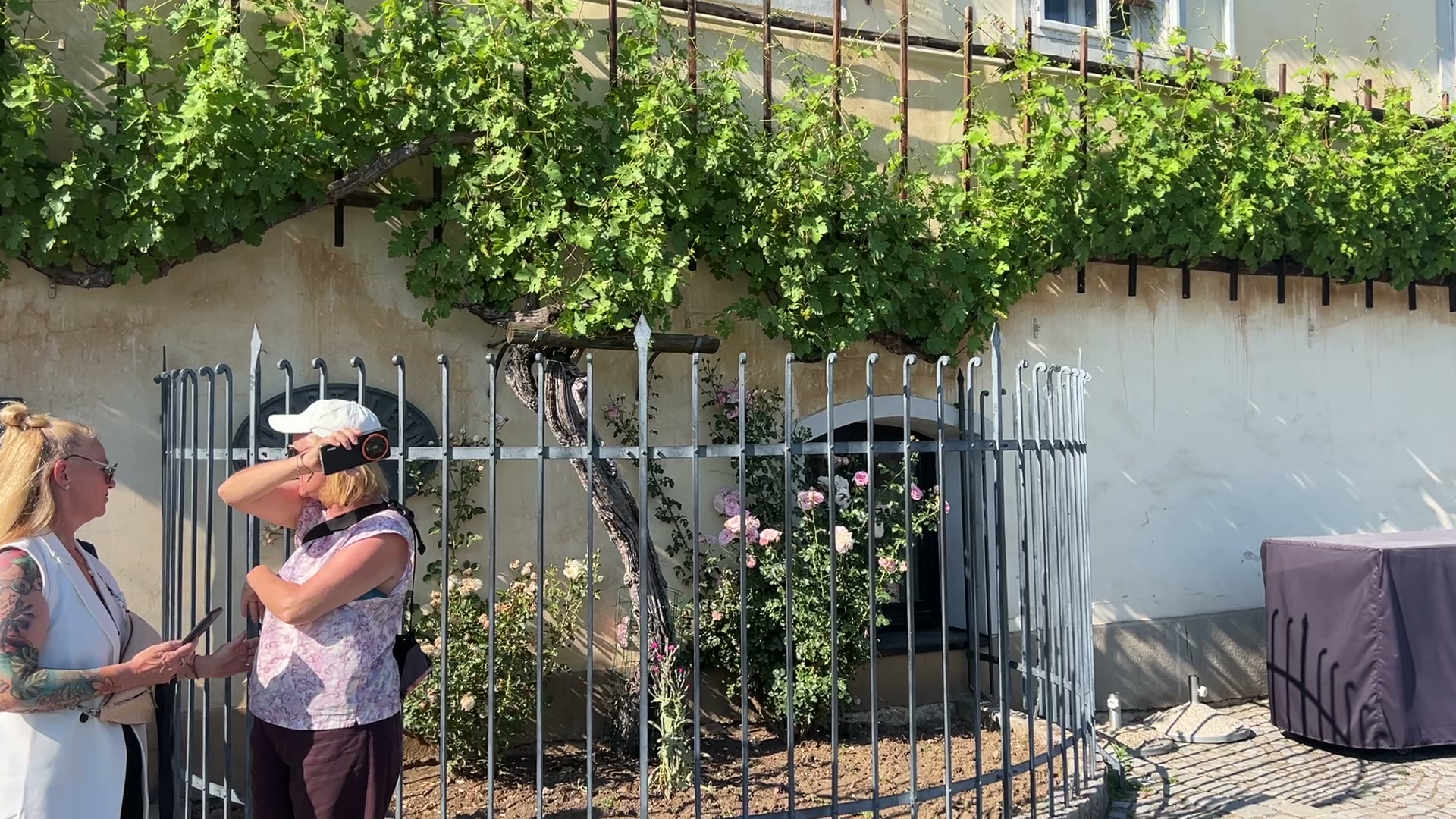
Slovenia's second city, and the one that surprises a group. The oldest vine on earth still grows on a house here, a cable car climbs Pohorje off the edge of town, and the underground wine cellars turn a tasting into something people talk about after. Hotel Habakuk sits right at the base of the lift, the food punches well above the city's size, and the regional host was one of the warmest of the week. A strong East-Slovenia anchor.
Maribor grows the oldest living grapevine in the world, more than four centuries on the same wall, and it still gives a few bottles a year. It is the kind of detail that does a program's storytelling for you: every participant remembers the city with the oldest vine, and they have the photo standing in front of it.
The cable car lifts you off the city and onto the Pohorje massif: trails and a terrace up top for the active half of the group, the view back over Maribor for the rest. Hotel Habakuk sits right at the base of the lift, which makes the logistics rare and easy, you stay where the activity starts.
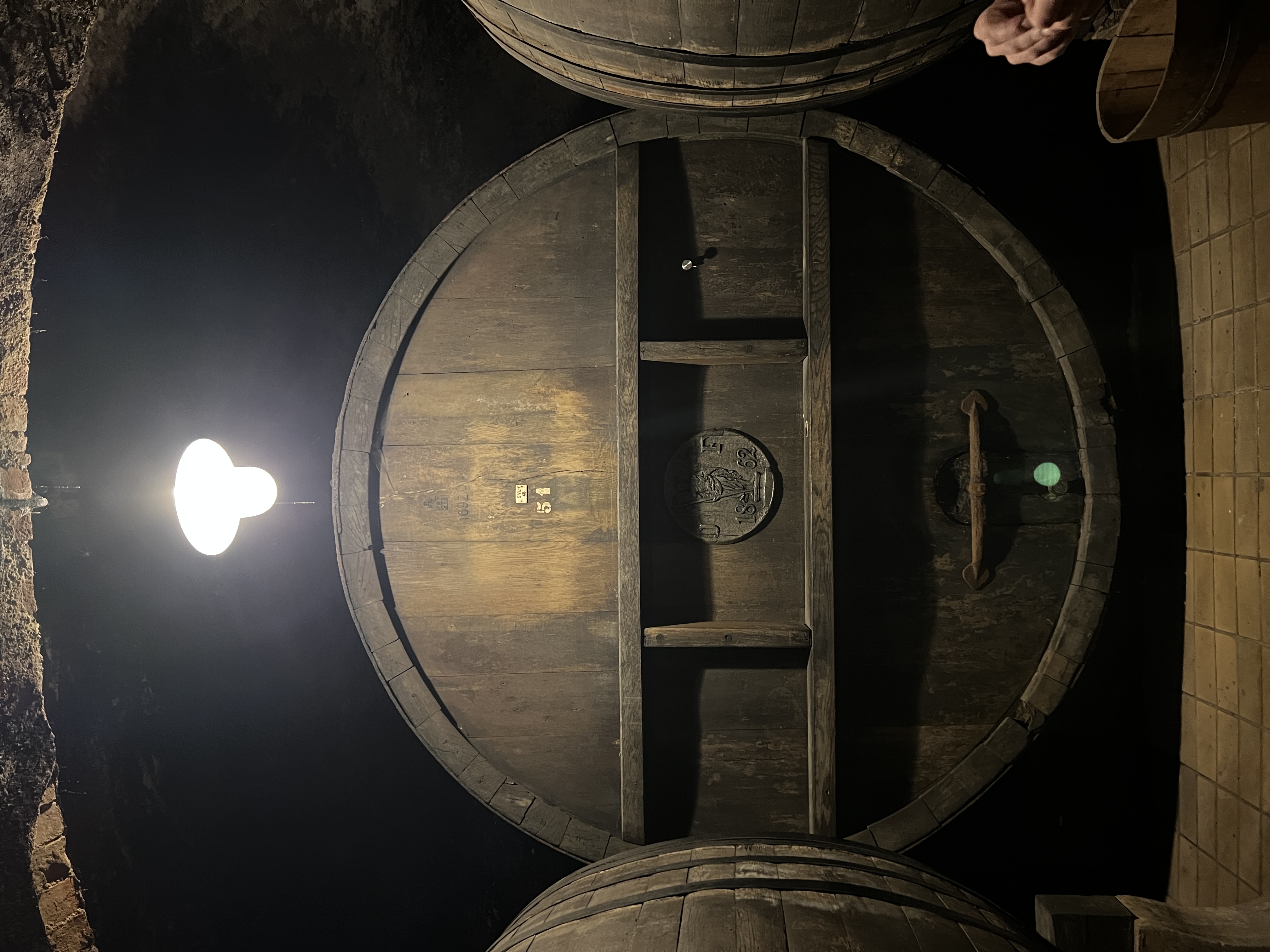
Down into the old vaulted cellars for a tasting, and this is the beat the group keeps. Stone tunnels, bottles racked into the dark, a pour in a room that has been doing exactly this for centuries. It is the elevated version of a wine stop, the experience people photograph, not the hangover kind.
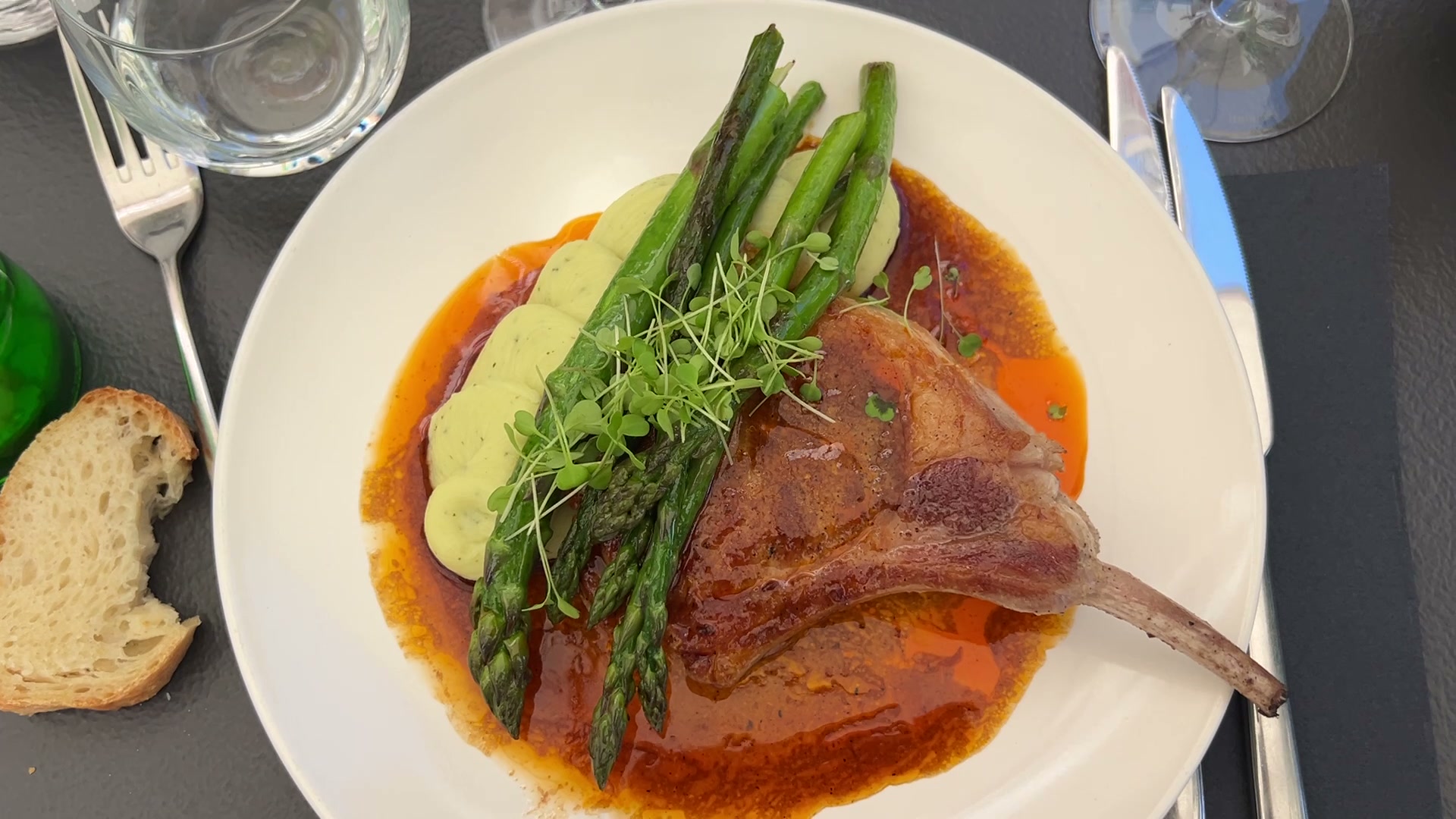
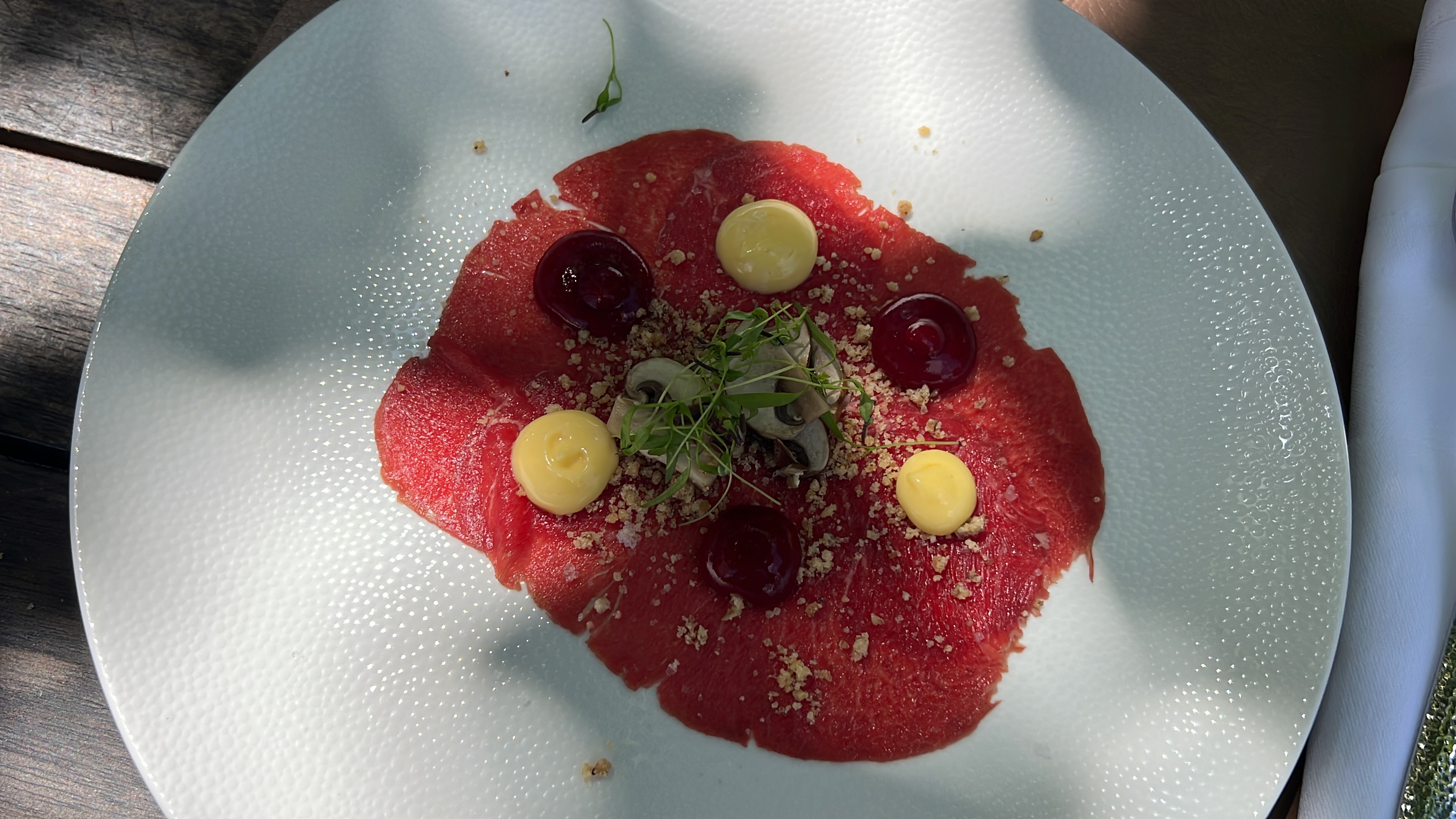
The eating here surprised me. Fudo and Rožmarin both plate well above what a second city usually offers, which matters when you are seating a group every night and want the dinners to carry their own weight.
Our host Nataša was one of the warmest of the week, and she showed me the place the way the strong regions always do: walking the vine, the lift, the cellars, not clicking through a deck. Book hosts who do that, and you feel it on site.
The East-Slovenia anchor: the world's oldest vine for the story, Pohorje for the half-day, the underground cellars for the memorable hour, and Habakuk at the base of the lift to keep it simple. Where you take a group when you want the country's east, not just the Ljubljana-and-Bled postcard.

The counts' castle and the Roman thermal valley below it, paired into one of the warmest days of the week. Celje gives a group a fortress with a view and a reception at the highest point, then drops them into a thermal spa to land soft. A few rooms and roads are mid-renovation, but the thermal facilities and the space itself are excellent.
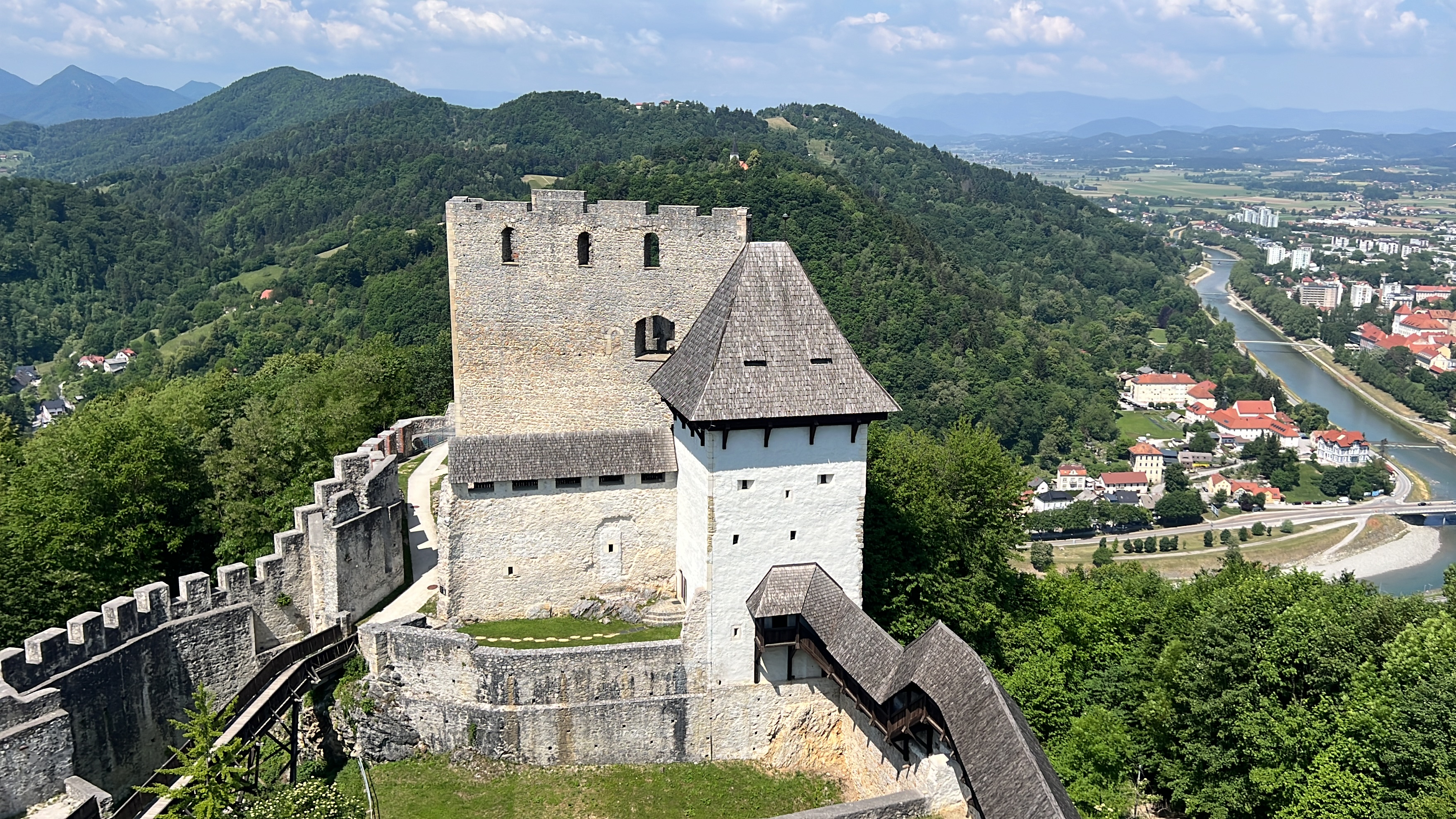
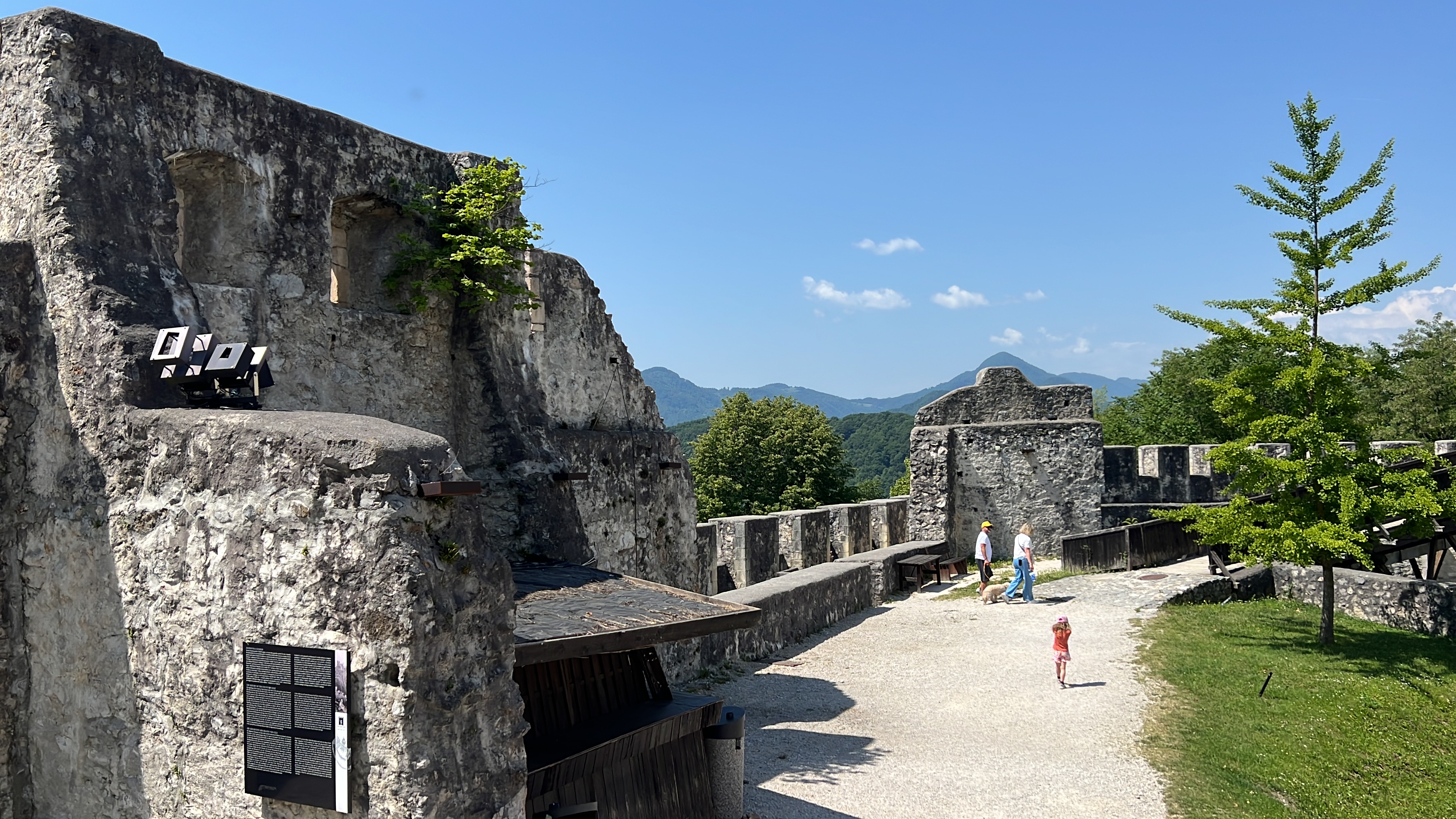
The largest castle in Slovenia, and the move is a sparkling-wine reception at the very top: panoramic views over the valley and a sense of arrival you cannot stage indoors. Host it at golden hour and the welcome runs itself.
Down into the Roman thermal valley to soften the group after the castle: a thermal spa, saunas, and a slow terrace breakfast that buys the morning back. This is where a reward group exhales, the unhurried counterweight to a packed itinerary.
One of the warmest hosts of the week showed me the place in person: the castle, the thermal grounds, the rooms, not a deck. As everywhere in Slovenia, the strong regions are the ones whose hosts walk the property with you.
A few rooms and roads were mid-renovation when I visited. The thermal facilities and the space are genuinely excellent, so I would simply confirm the current state of the rooms before placing a group, the way you would anywhere mid-refresh.
The warm middle day of a program: a castle reception with a view to open it, the thermal valley to land the group soft, and a host who shows up in person. Best as a paired castle-and-spa day inside a larger Slovenia itinerary.
Weighing a program, even loosely? Tell me what you're considering. No calendar pressure, no group required yet.
The button opens an email with a few prompts already in it, just fill in what fits. You're writing to me directly.